
Review: Karakorum Flex-lock
What we liked
Flip-and-go simplicity — one motion to engage, one to release
Real feel-difference on hard snow and icy conditions, where soft boots typically struggle
A genuine training aid for riders still developing their uphill technique
Broad compatibility across the Karakoram binding range
What we didn’t
Getting the setup right is a multi-session process, not a one-time job
Extremely position-sensitive — small adjustments have big consequences
Only works for your downhill ski’s inside edge
Reduces your stride efficiency — more steps, more energy, longer days
A ski strap gets close to the same result, for both edges, at a fraction of the cost
Locked into the Karakoram ecosystem — won't work with other highbacks and straps
The Verdict
THE SHORT READ…
Tested over two seasons, countless traverses. One lever flip that promises to turn your soft boot setup into something a hardbooter would respect. The numbers behind it are compelling — on paper, Karakoram's own testing puts it within a whisker of hard boot touring performance. In the right conditions, a steep icy traverse or a firm layer hiding under fresh snow, you'll actually feel it working. The installation, however, is an exercise in patience that involves tying knots, untying knots, and heading back to the mountain to check if you got it right. In the field, it won't stop your outer ski from slipping on traverses, and the stride penalty is real. If you're newer to touring and icy traverses are still a struggle, it's worth a try — you'll feel the difference immediately. If you've been at this for a few seasons, a ski strap and crampons will sort you out for a fraction of the price.
THE LONG READ …
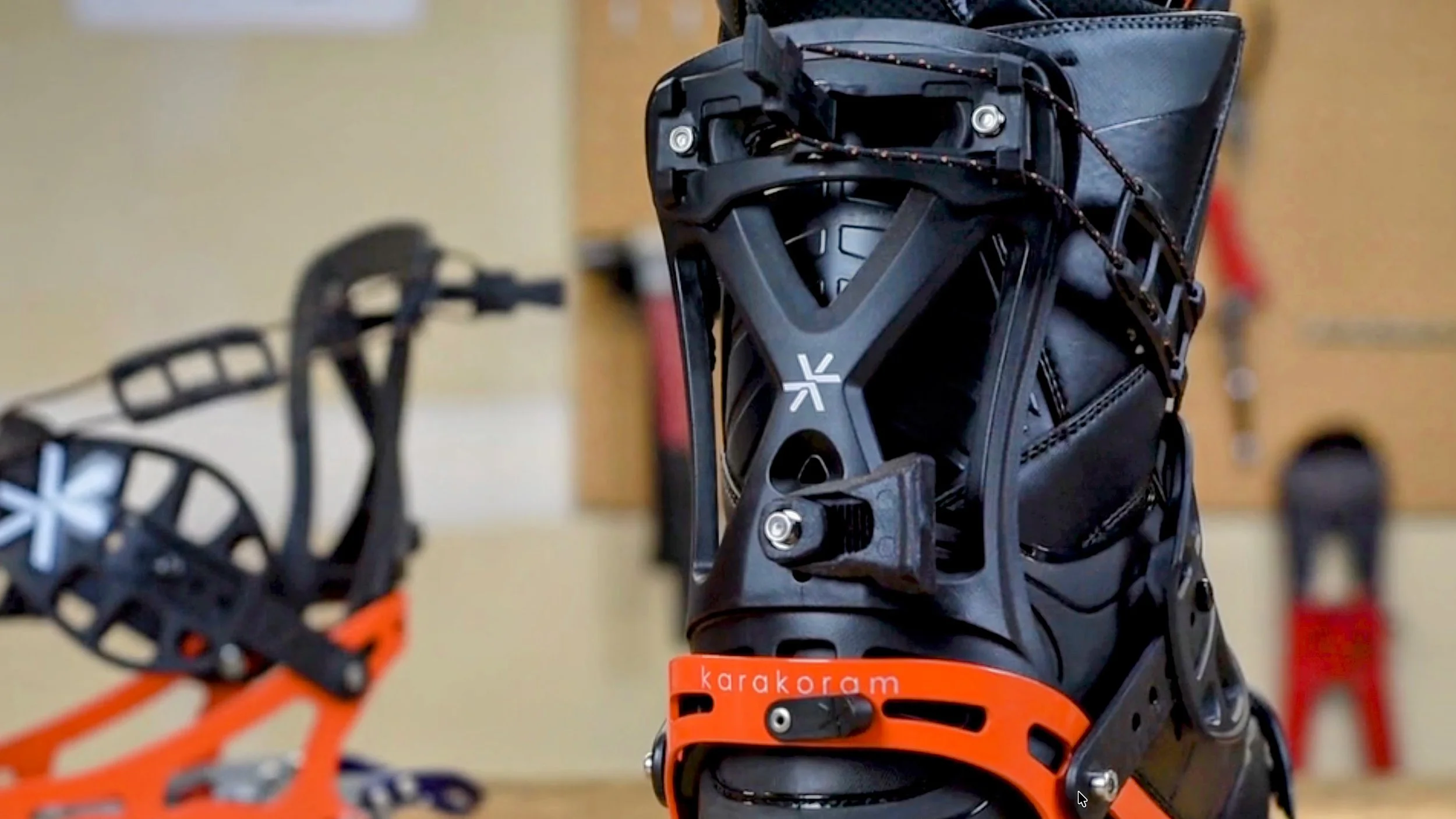
Traversing on ice in soft boots is the one thing that makes you look enviously at the hardbooters and skiers, who make it look easy. Karakoram's answer to that is the Flex-Lock — a small add-on accessory promising to close the gap between soft boot and hard boot touring performance. I've been touring for seven years on a soft boot setup, raised on Alpine conditions and a rocker split, so traversing and using my ankles on ice is second nature at this point. That context matters, because this review is as much about who this product is for as whether it works.
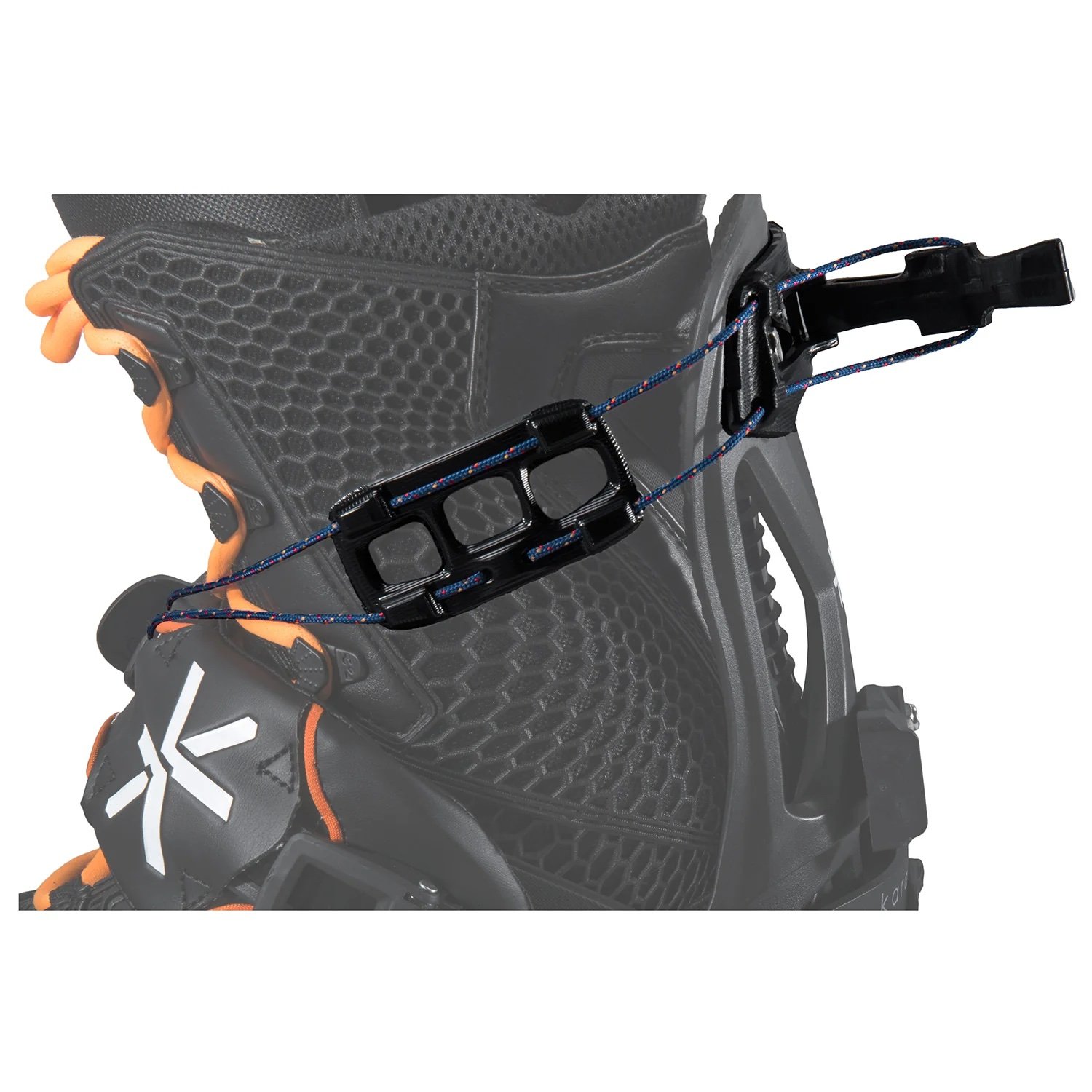
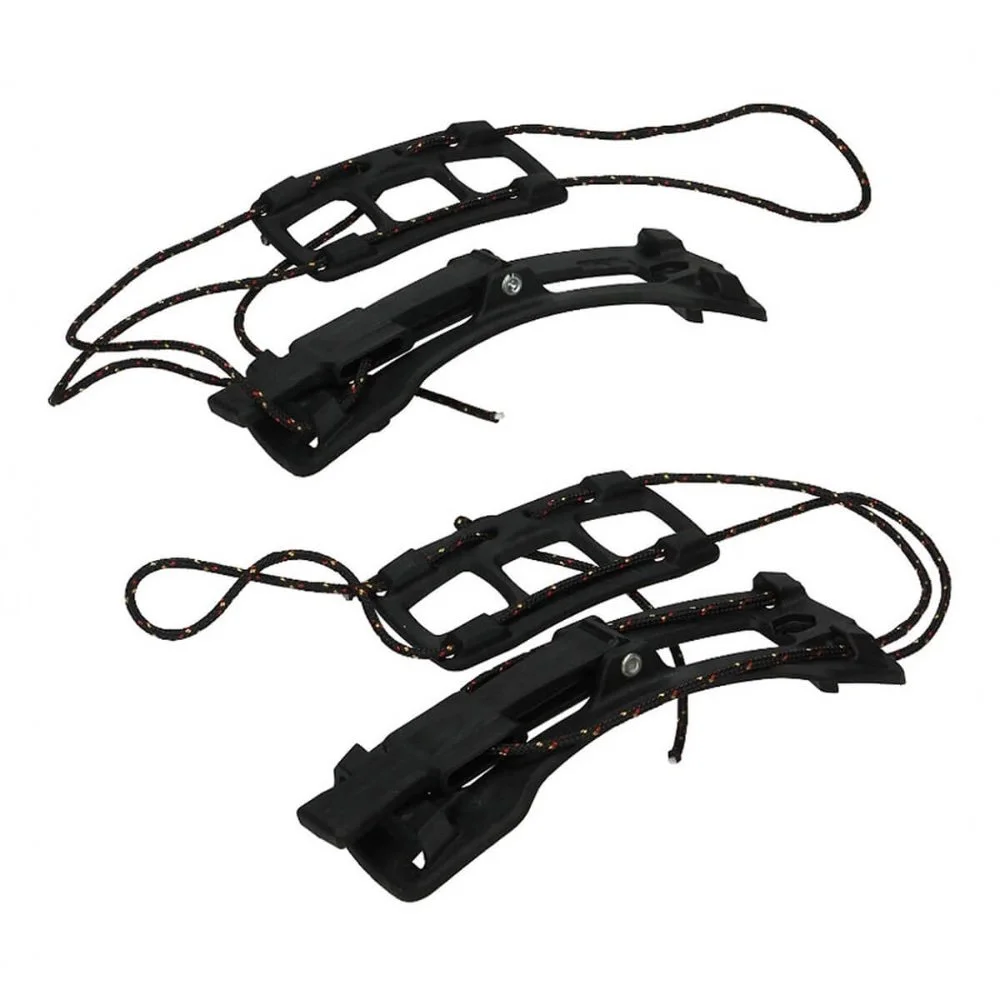
What is it - The idea is simple — a cord and lever system that harnesses the stiffness of your highback and transfers it directly to your boot cuff on the traverse. Flip the lever on the way up, and it locks your ankle laterally, helping you hold the edge on icy sidehills. Flip it back off at the top, and you've got your full lateral flex back for the descent. One flip, job done.
The claims, and the research behind them - Karakoram didn't just release this thing and hope for the best — they actually ran their own edge force transfer test to back up the claim.
The results, by their own numbers, are pretty compelling. A standard ski strap around your highback and boot cuff gets you a 15% improvement in edging over no lateral support at all. The Flex-Lock jumps that number to 101% — nearly doubling your edge grip. For reference, a 4-buckle AT hard boot sits at 104%. But lab numbers are one thing — the more useful question is how much of that difference you actually feel once you're past the beginner stage.
Firstly, let's talk about getting the thing set up on your binding.
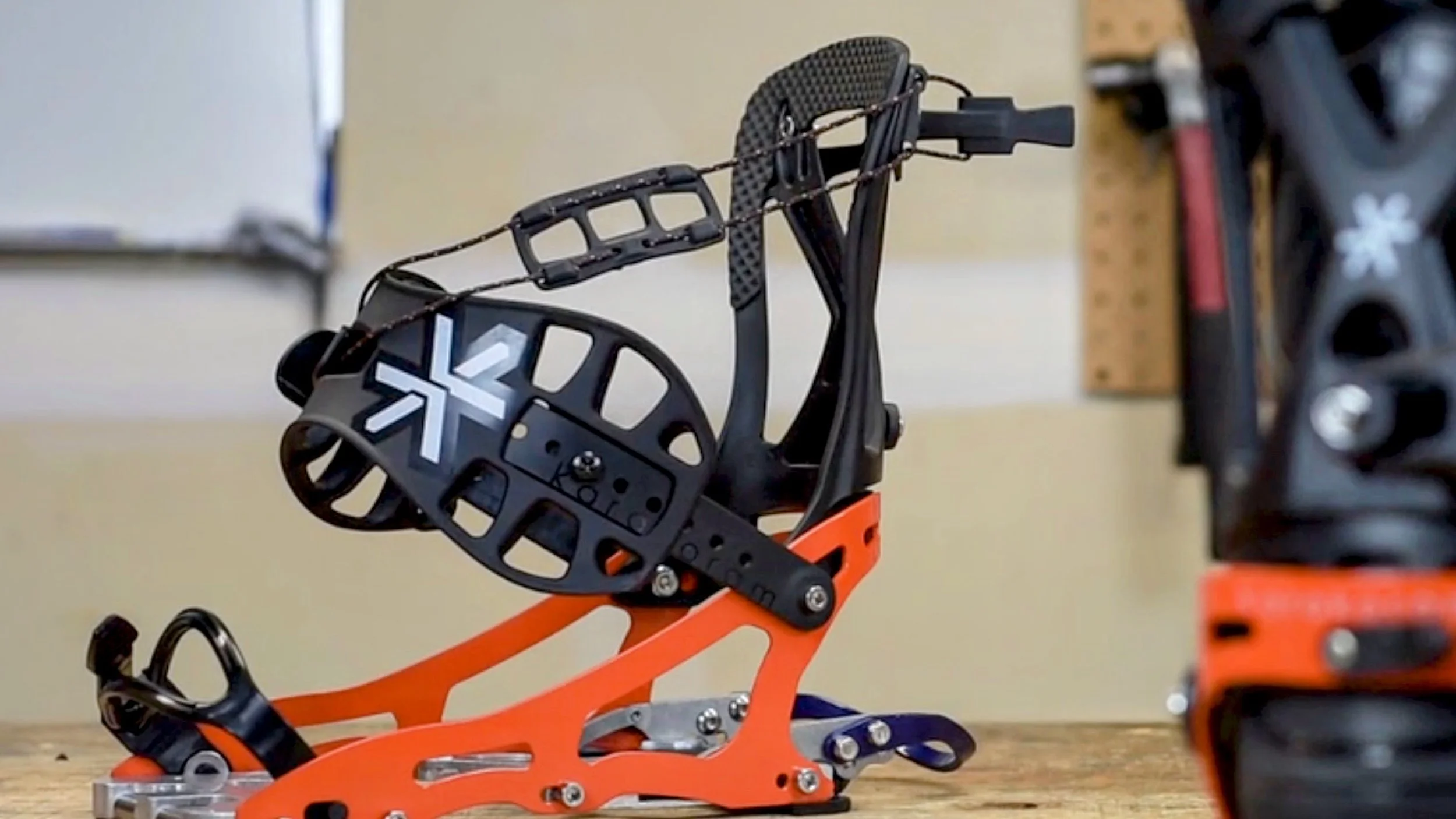
Installation - From the instructions, it looked straightforward — find the position, tighten the cords, done. I couldn't be more wrong.
The manual tells you to position the plastic buckle between the top of the highback and the ankle strap on the inner side of your boot. I ended up having to cross-reference the product photos just to get a basic idea of where it should actually sit. Then comes the adjustment. First, you engage the lever and slide the buckle along the boot to find a position that feels right. Then you disengage the lever and tighten the knot to lock it in place. So you're guessing, tying a knot, checking, untying, moving the buckle, and going again.
Nearly two hours later, I was done — and I was lucky. On my Deeluxe Spark Fusion (and previously Spark XV) boots, the lacing system left me basically one option for where the plastic buckle could go. No lacing system on the inner side of your boot? You're in for a longer ride. And here's what nobody tells you — the position of that plastic buckle is brutally sensitive. Move it a centimetre, and you'll feel the difference.
There's no adjusting this thing in the field — you set it at home, go test it, come back, tweak it, and go again until you either find the sweet spot or accept what you've got.
On the hill - Right, so you've survived the installation. Now let's see if those claim numbers hold up in the real world. In the steep sections with fresh snow or when you're breaking trail, you don't need it — and that's fine, it's not what it was designed for. Where you'll actually need it is on a steep icy traverse, or when there's a firm icy layer hiding underneath fresh snow. Engage your downhill ski’s inside edge, and you instantly feel something stiff in the back of your boot. If your heel-stepping technique is solid, you feel more confident with every step — and I'll give it this: I was surprised I could feel it working at all. For someone still building that technique, that confidence boost on tricky terrain is genuinely valuable.
As for also stopping the uphill ski slipping on traverses — the thing I was most hoping it would fix — that doesn’t change. Crampons would sort that faster. This solution only works for the downhill ski’s inside edge. Which is certainly better than nothing, if these types of traverses cause you problems.
As for Karakoram's claim that a ski strap is significantly less effective — I've tried both, and the difference is there, but smaller than their numbers suggest. With the Flex-Lock, I felt slightly more locked in, but not enough to change how I approached the traverse. A guide I rode with in France put it well — the closer the highback sits to your boot, the shorter your stride gets. You're trading lateral stiffness for extra steps, and over a full day, that adds up.
SUMMARY…
So would I recommend it? It depends on who's asking. If you're newer to touring and icy traverses are still a struggle, it's worth a try — you'll feel the difference immediately, and it could genuinely accelerate your technique. If you've been at this for a few seasons and already know how to heel-step on ice, a ski strap will get you most of the way there for a fraction of the price. And if your main gripe is your downhill ski washing out on traverses — get crampons.
One last thing — I've never once spotted a Flex-Lock on a pro rider's setup. Draw your own conclusions.